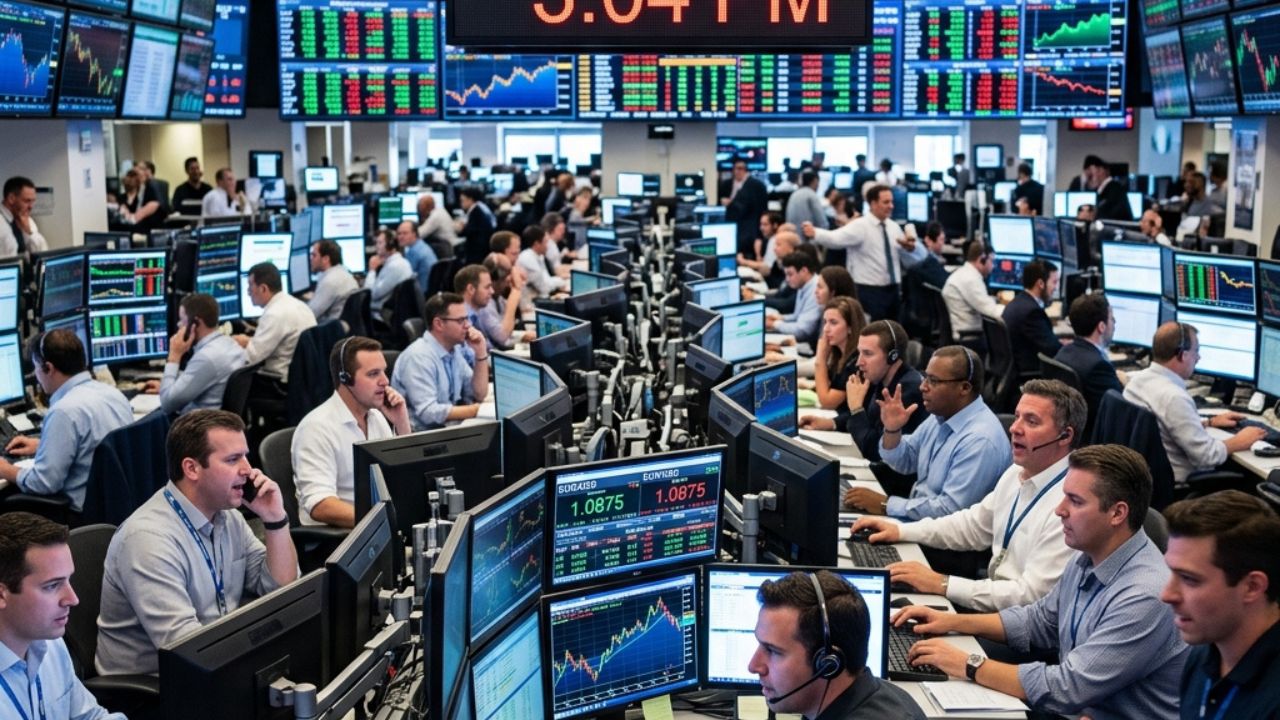
The best time to trade Forex in the United States is between 8:00 AM and 12:00 PM Eastern Standard Time (EST). This four-hour window marks the overlap between the New York and London trading sessions, offering the highest market liquidity, the tightest spreads, and the greatest potential for profitable price movements.
The foreign exchange market operates 24 hours a day, five days a week, making it the most accessible financial market in the world. Trillions of dollars change hands daily as institutions, corporations, and retail traders buy and sell international currencies. Because the market never sleeps during the trading week, you can technically execute trades at any hour of the day or night.
However, all trading hours do not offer equal opportunities. Success in the foreign exchange market requires profound attention to market timing. Currencies experience different levels of volatility and liquidity depending on which global financial centers are actively conducting business. Trading during quiet periods often results in flat price movements and wider spreads, reducing your overall profit potential and increasing transaction costs.
To maximize profits, traders based in the United States must understand the natural rhythm of global finance. Aligning your trading schedule with periods of peak market activity allows you to capitalize on substantial price movements. This guide breaks down global trading sessions, identifies the most profitable hours for US-based traders, and provides actionable strategies for navigating the foreign exchange market effectively.
How do global Forex market hours work?
The foreign exchange market functions through a global network of banks and financial institutions rather than a centralized physical exchange. Market activity follows the sun around the earth, moving through four major global financial centers: Sydney, Tokyo, London, and New York.
Each financial center operates during its respective normal business hours. When one major market closes, another one opens, creating a continuous trading environment.
The Sydney session initiates the trading week. Sydney operates from 5:00 PM to 2:00 AM Eastern Standard Time (EST). Market activity during the Sydney session remains relatively low compared to later sessions, though AUD and NZD currency pairs see increased movement.
The Tokyo session opens next, running from 7:00 PM to 4:00 AM EST. As the financial hub of Asia, Tokyo brings increased liquidity to the market. Traders see significant movement in pairs involving the Japanese Yen (JPY), such as USD/JPY and EUR/JPY.
The London session serves as the undisputed heavyweight of foreign exchange trading. Operating from 3:00 AM to 12:00 PM EST, London accounts for roughly 43% of all global foreign exchange trading volume. The sheer volume of transactions during the London session creates high liquidity and significant volatility across almost all major currency pairs.
The New York session opens at 8:00 AM EST and closes at 5:00 PM EST. New York represents the second-largest foreign exchange market globally. Because the United States Dollar (USD) is involved in roughly 85% of all foreign exchange transactions, the New York session heavily dictates the overall direction of the market.
What is the best time to trade Forex in the USA?
The most profitable time to trade foreign exchange in the United States occurs between 8:00 AM and 12:00 PM EST. This specific four-hour block represents the New York and London session overlap.
During this overlap, the world’s two largest financial centers operate simultaneously. More than 50% of all daily foreign exchange transactions occur during this four-hour window. This immense concentration of trading volume generates the highest liquidity of the trading day. High liquidity benefits traders by ensuring tighter bid-ask spreads, which directly lowers transaction costs.
Furthermore, the New York and London overlap produces the greatest market volatility. Volatility provides the price movement necessary for traders to capture substantial profits. During these hours, major institutional investors execute large orders, driving definitive market trends that technical traders can identify and ride.
US traders should focus primarily on major currency pairs during this overlap window. The EUR/USD and GBP/USD pairs experience their peak daily movement between 8:00 AM and 12:00 PM EST. The USD/CHF and USD/JPY pairs also offer excellent trading opportunities during these hours due to high institutional participation.
Outside of the morning overlap, US traders can still find opportunities during the afternoon phase of the New York session (12:00 PM to 5:00 PM EST). However, trading volume drops significantly after European markets close at noon. Traders operating in the US afternoon should adjust their expectations for smaller price movements and focus heavily on USD-specific news events.
What factors influence optimal Forex trading times?
Market hours provide a baseline for trading activity, but several external variables dictate the actual quality of a trading session. Understanding these variables allows US traders to anticipate market movements accurately.
Economic News Releases
Economic data directly influences currency valuation. Governments and central banks release crucial economic reports on predetermined schedules, causing immediate and often violent market reactions. For US traders, the most critical data releases occur at 8:30 AM EST and 10:00 AM EST.
Key reports to monitor include the Non-Farm Payrolls (NFP) report, released on the first Friday of every month. The NFP report historically triggers massive volatility across all USD pairs. Traders must also watch the Consumer Price Index (CPI) and Federal Open Market Committee (FOMC) interest rate decisions. The FOMC typically announces interest rate decisions at 2:00 PM EST, providing a sudden burst of late-day volatility.
Market Volatility and Liquidity
Liquidity refers to the market’s ability to buy or sell a currency pair without causing a significant change in its exchange rate. Volatility measures the rate and magnitude of price changes over a specific period. High liquidity ensures orders are filled quickly at desired prices, while high volatility provides the distance prices need to travel for traders to secure meaningful profits. The New York and London overlap naturally provides the optimal balance of high liquidity and high volatility.
Geopolitical Events
Elections, trade agreements, international conflicts, and sudden policy shifts alter global capital flows. When geopolitical instability arises, traders typically move capital into safe-haven currencies like the US Dollar, Swiss Franc (CHF), and Japanese Yen. US traders must monitor global news feeds, as geopolitical developments can override normal market rhythms and create erratic trading conditions at any hour.
What are the most practical strategies for US Forex traders?
Succeeding in the foreign exchange market requires a structured approach. US traders can maximize the advantages of the New York session by implementing rigorous, time-tested strategies.
Developing a time-based trading plan
A professional trading plan dictates exactly when you will enter and exit the market. US traders should schedule their primary market analysis between 7:00 AM and 8:00 AM EST, preparing them for the New York session open. By establishing strict trading hours—such as strictly trading the 8:00 AM to 12:00 PM overlap—you prevent overtrading and protect yourself from the low-liquidity conditions of the late US afternoon.
Using technical indicators during high-volume periods
Technical indicators perform best when market volume is high. During the New York and London overlap, trends establish themselves clearly. Traders can utilize the Moving Average Convergence Divergence (MACD) indicator to identify momentum shifts. The Relative Strength Index (RSI) helps identify overbought or oversold conditions during peak hours. Because institutional volume drives the morning session, breakout strategies utilizing support and resistance levels boast a higher probability of success.
Implementing rigid risk management
The high volatility of the morning overlap presents significant profit potential, but it equally magnifies the risk of loss. US traders must employ strict risk management protocols. Place stop-loss orders on every single trade to cap potential downside. Never risk more than 1% to 2% of your total account capital on a single position. By keeping position sizes manageable, traders can survive the sudden price spikes that frequently occur during major US economic releases.
Which tools and resources do successful Forex traders use?
Professional traders rely on specialized software and information platforms to maintain a competitive edge in the foreign exchange market.
Economic Calendars
An economic calendar stands as the most critical tool for a day trader. Platforms like Forex Factory and Investing.com offer free, real-time calendars that list all upcoming global economic reports. These calendars categorize events by expected impact level (low, medium, or high), allowing US traders to know precisely when to expect volatility spikes throughout the New York session.
Time Zone Converters
Because foreign exchange spans multiple global regions, tracking session opens and closes can become confusing. Forex specific time zone converters visually display which markets are currently active. These tools help US traders quickly identify session overlaps without manually calculating global time differences.
Reputable Forex Brokers and Platforms
Executing strategies during peak hours requires a broker with fast execution speeds and reliable servers. Choose a brokerage regulated by the Commodity Futures Trading Commission (CFTC) and the National Futures Association (NFA) in the United States. Ensure your broker supports robust charting platforms like MetaTrader 4 (MT4), MetaTrader 5 (MT5), or TradingView, which offer the advanced technical tools necessary for professional analysis.
What common mistakes should US Forex traders avoid?
Even with a strong understanding of market hours, traders frequently sabotage their accounts by committing easily avoidable errors.
Trading during low liquidity periods guarantees frustration. Many new US traders attempt to force trades between 1:00 PM and 5:00 PM EST after the European markets have closed. During these hours, spreads widen, and prices often drift aimlessly. Choosing to sit on your hands during the afternoon session is often the most profitable decision a US trader can make.
Ignoring economic news leads to catastrophic losses. Technical analysis fails when major economic reports hit the wires. A trader holding a position without checking the economic calendar might watch their trade instantly hit a stop-loss when an unexpected CPI report triggers a massive market reversal.
Over-leveraging during volatile hours destroys accounts rapidly. Brokers provide leverage to amplify buying power. While leverage increases potential profits, it equally amplifies losses. Using maximum leverage during the highly volatile New York morning overlap ensures that even a minor market fluctuation can result in a margin call.
Maximize Your Trading Potential in the US Market
Success in the foreign exchange market extends far beyond simply knowing how to read a chart. It demands a profound understanding of when the market offers the best opportunities. For US-based traders, the formula for maximum profit centers on the morning overlap between the New York and London sessions.
By focusing your efforts on the 8:00 AM to 12:00 PM EST window, monitoring critical US economic releases, and applying disciplined risk management, you position yourself to capture substantial market movements. Treat your trading as a professional business, continually educate yourself on global economic factors, and adapt your strategies as market conditions evolve.
Frequently Asked Questions (FAQ)
What are the prime hours for Forex trading in the US?
The prime hours for Forex trading in the United States occur between 8:00 AM and 12:00 PM Eastern Standard Time (EST). This period represents the overlap between the New York and London trading sessions, providing the market’s highest daily volume and liquidity.
How does daylight saving time affect Forex trading hours?
Daylight saving time shifts global market hours. Because the United States and the United Kingdom observe daylight saving time on different dates, the exact overlap period between New York and London briefly changes twice a year. Traders must adjust their schedules slightly during March and November to account for these shifts.
Which currency pairs are best to trade during US hours?
The EUR/USD, GBP/USD, USD/JPY, and USD/CHF are the best currency pairs to trade during US hours. These major pairs feature the United States Dollar and European currencies, ensuring massive institutional participation and tight spreads during the New York session.
Is it better to trade during session overlaps?
Yes, trading during session overlaps is vastly superior to trading single sessions. Overlaps combine the trading volume of two major global markets, creating the high liquidity needed for tight spreads and the volatility required for profitable price movements.
What news events should US Forex traders watch out for?
US Forex traders must closely monitor the Non-Farm Payrolls (NFP) report, Consumer Price Index (CPI) data, Gross Domestic Product (GDP) announcements, and Federal Open Market Committee (FOMC) interest rate decisions. These reports consistently trigger major price fluctuations across all USD currency pairs.